AI Amazon Repricer
Boost your Amazon profits and avoid price wars with AI repricing
 Skip to content


The global retail industry continues to undergo transformation, driven by evolving consumer habits, rapid growth in eCommerce, and intensifying competition among online sellers, especially during the holiday shopping season.

Share this post


The global retail industry continues to undergo transformation, driven by evolving consumer habits, rapid growth in eCommerce, and intensifying competition among online sellers, especially during the holiday shopping season. For Amazon sellers, the entire holiday shopping season is the most critical time of the year.
The holiday season, marked by major sales events, presents significant opportunities but also poses challenges, including rising ad costs, higher returns, and intensified price competition. Preparing the right checklists and strategies early is essential not only to survive the holiday rush but also to maximize profits during the Amazon holiday sale and beyond.
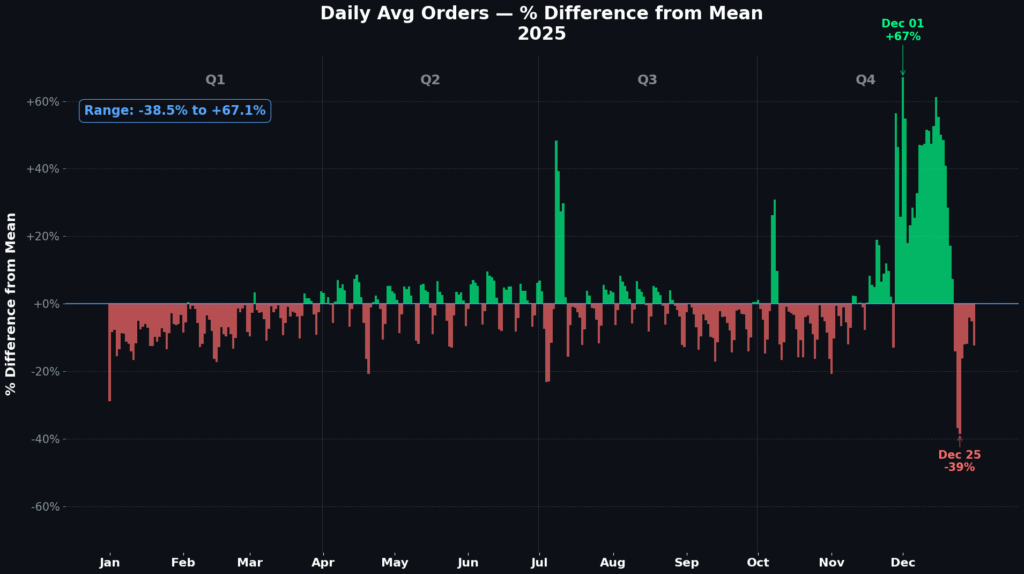
Key shopping events driving the Q4 holiday season include Halloween (October 31), Thanksgiving (November 27), Black Friday (November 28), Cyber Monday (December 1), Hanukkah (December 14–22), Christmas Eve and Christmas Day (December 24–25), Boxing Day (December 26), and New Year’s Eve (December 31). These celebrations collectively fuel massive Christmas sales opportunities for Amazon sellers.
Even with tighter budgets and cautious spending, the holiday season continues to drive record-breaking Amazon sales year after year. Apart from Prime Big Deal Days, Prime Day, and Q4 sales events, attract millions of Prime members looking for early deals and the best deals during the holiday rush.
In 2025, global retail sales are projected to exceed $31 trillion, with the United States accounting for approximately $7.4 trillion. This growth is fueled by an estimated 2.77 billion digital buyers worldwide, underscoring how deeply eCommerce is now woven into holiday shopping habits.
For Amazon sellers, this unprecedented level of online activity presents both opportunities and challenges. Success during the holiday rush will depend on preparing early. These early preparations include optimizing product listings, securing sufficient inventory, and leveraging Amazon’s seller tools strategically to capture demand while delivering a seamless customer experience.
As most consumers plan to spend more and shop early this holiday season, online shopping is expected to surge before the year ends. For that matter, Amazon sellers should take precautionary measures to immediately resolve or even avoid potential challenges in retail this Q4 of 2025.
To give sellers a preview of potential shopping issues and other concerns during the holiday shopping spree of online consumers, here are some challenges to anticipate in Q4 of 2025.
Many Amazon sellers encounter communication overload during the holiday season. Communication overload often leads to poor customer service and a decline in overall Amazon business performance.
Too much information can overwhelm new sellers and their teams, leading them to overlook or neglect critical messages and urgent tasks. One contributing factor to this communication overload is the ineffective filtering or organization of information.
What To Do:
During the holiday rush, the supply chain can be a nightmare for entrepreneurs and online sellers, especially in the latter stages —inventory management, warehousing, order fulfillment, and last-mile delivery.
Amazon sellers must keep track of numerous things, and the influx of customer engagements and orders makes it more challenging to manage their business, which can lead to supply chain disruptions.
What To Do:
During the Amazon holiday sale, competition is expected to increase, making it more challenging for sellers to rank in Amazon’s organic search results. With more lightning deals, price drops, and deep discounts appearing across the marketplace, sellers must plan ahead and align their offers with other promotions running throughout Q4.
What To Do:
The Q4 of 2025 could be extra challenging for Amazon sellers and the rest of the retail industry. With fluctuating consumer demand and increasingly strained supply chains during the holiday season, inventory management can quickly become a critical concern.
What To Do:
Always remember to forecast demand by mid-November and prepare for last-minute orders in late November to ensure expedited shipping options and smooth handling of remaining stock after peak sales.
During the Amazon holiday sale, an increase in orders naturally raises the risk of concerns. Negative reviews or complaints are common in this period, but if left unresolved, they can quickly impact your seller metrics and overall performance.
What To Do:
One of the biggest concerns during the holiday rush is the increase in price wars. As competition intensifies, Amazon sellers often resort to aggressive price cutting to secure the Amazon Buy Box. While these frequent price changes may boost short-term sales, they can also erode profit margins and lead to a race to the bottom if not managed strategically.
What To Do:
For sellers promoting products outside of Amazon through landing pages or external ads, downtime is a risk. Every minute a landing page is offline, potential revenue is lost.
What To Do:
During the holiday rush, advertising costs, particularly for Sponsored Products, tend to surge as competition intensifies. Sellers who fail to plan their budgets carefully risk overspending or exhausting their ad spend without achieving meaningful returns.
What To Do:
The holiday rush does not end on December 25; sellers often face a wave of returns in January. Smart sellers treat this period as a bridge to other sales campaigns and new deals, using post-season activity to retain customers year-round.
What To Do:
Successfully navigating the holiday season involves striking a balance between automation and human oversight. Automation tools, such as Amazon repricers and inventory management software, automate repetitive and time-consuming tasks.
Meanwhile, human involvement ensures that critical areas, such as customer service, advertising creativity, and supply planning, receive the attention they need.
To bridge the gap between automation and human oversight, many sellers now utilize AI-powered tools to handle routine tasks. This strategy not only reduces the need for constant manual adjustments but also frees up valuable time for focusing on growing their business during the holiday rush.
Benjamin Franklin once said, “By failing to prepare, you are preparing to fail.” For that matter, it is important for Amazon sellers to prepare for the upcoming Q4 holiday season.
In terms of preparation, you should not only prepare physically (processes & inventory), technically (tools & technology), but also financially. You should also prepare your mind for the challenges of this holiday season.
Anticipate all potential concerns for the business and create a mental outline of how you should respond to any issues.





Set up in minutes with the help of our customer success team, or reach out to our sales team for any questions. Start your 15-day free trial—no credit card needed!
x


